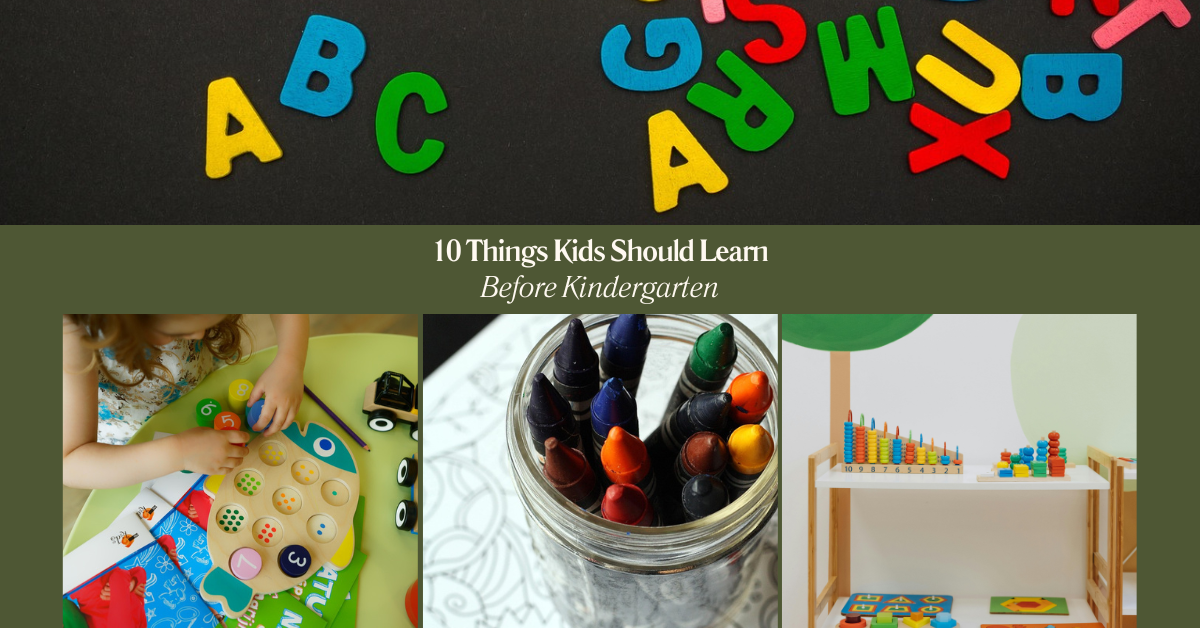
10 Things Kids Should Learn Before Kindergarten
Every child should be learning foundational skills before they walk into a kindergarten classroom. Not because we want perfection—but because confidence, curiosity, and basic independence go a long way.
My boys are currently 5 and 3, and we work on learning something almost every day. Some days it’s structured, some days it’s messy, and some days it looks like play (because most of the time, it is). But all of it matters.
Not only does this help them communicate better at home and with others, it also helps the kindergarten teachers who juggle far more than they’re paid for. The patience they have is unmatched—and if there’s anything I can do to mold my little humans before they reach that stage, I’m all in.
Skills We’re Working On at Home
These aren’t advanced concepts. They’re the basics—but the basics build everything.
- Shapes and colors
- Letters and numbers
- Tracing and learning how to hold a writing utensil
- Coloring with crayons
- Using kid-safe scissors
- Painting and crafts
- Cleaning up after activities
- Manners, listening ears, and making eye contact
- Paper airplanes and hands-on projects
- Puzzles and problem-solving
Some of these look simple to adults. But for a child, they require patience, coordination, focus, and confidence—all skills they’ll carry far beyond kindergarten.
Why This Matters More Than We Think
When kids enter school with exposure to these skills, they’re not just “ahead”—they’re less overwhelmed. They’re more willing to try. They’re less frustrated when something doesn’t come easily.
And honestly? Society benefits too.
Learning doesn’t stop after kindergarten, and it shouldn’t start there either. Dialing things back to the basics has given me a whole new appreciation for how challenging learning can be. It’s easy to get frustrated when a child isn’t grasping a concept—but try learning something brand new as an adult. A new language. A new skill. Something that feels mundane but necessary.
That perspective changes everything.
We’re not raising kids to check boxes—we’re raising humans who are learning how to learn. And that might be the most important lesson of all.