
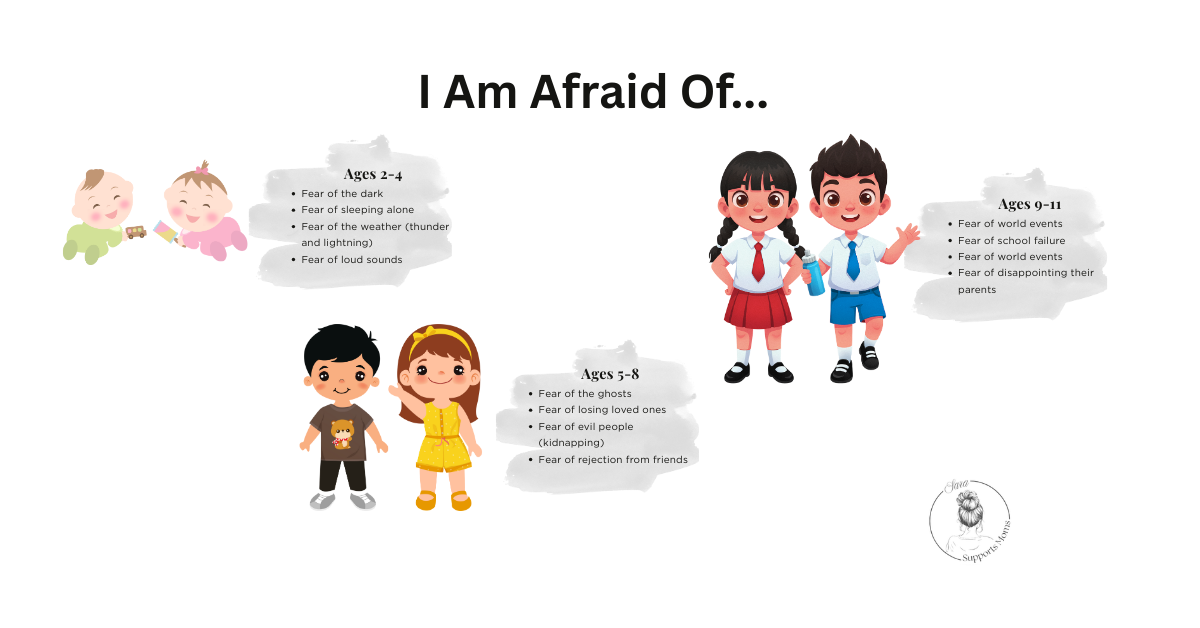
Fear is a normal, healthy part of childhood. As kids grow, their fears change—not because they’re becoming more anxious, but because their understanding of the world is expanding. What feels small to adults can feel overwhelming to a child, especially when their imagination or awareness outpaces their emotional tools.
Understanding what children are afraid of at different ages helps parents respond with empathy instead of dismissal—and confidence instead of panic.
Below is a breakdown of common fears by age group, and why they show up when they do.
Ages 2–4: Fear of the Unknown & Separation
At this age, children are just beginning to understand the world around them. Their imagination is powerful, but their ability to reason is still developing.
Common fears include:
- Fear of the dark
- Fear of sleeping alone
- Fear of weather (thunder and lightning)
- Fear of loud sounds
Why it’s happening:
Young children can’t yet separate imagination from reality. Loud noises and darkness feel unpredictable and unsafe. Separation—from parents, light, or familiarity—can feel like real danger.
How parents can help:
- Keep routines predictable and calming
- Validate feelings (“I know that sounded scary”)
- Offer comfort objects and reassurance
- Avoid forcing independence too quickly
Ages 5–8: Fear of Harm, Loss & Social Belonging
As children become more aware of the world and other people, their fears become more specific—and more emotional.
Common fears include:
- Fear of ghosts or imaginary creatures
- Fear of losing loved ones
- Fear of “bad” or evil people (kidnapping, harm)
- Fear of rejection from friends
Why it’s happening:
Kids at this age understand that bad things can happen, but they don’t yet have the context to judge how likely they are. Social belonging also becomes deeply important.
How parents can help:
- Answer questions honestly but gently
- Limit exposure to frightening media
- Reassure safety without promising “nothing bad will ever happen”
- Talk openly about friendships and emotions
Ages 9–11: Fear of Expectations & the Bigger World
By this stage, children are thinking more abstractly. They notice global events, academic pressure, and emotional expectations—especially from parents.
Common fears include:
- Fear of world events
- Fear of school failure
- Fear of disappointing their parents
Why it’s happening:
Kids now understand consequences, comparison, and responsibility. They care deeply about doing well—and about what adults think of them.
How parents can help:
- Emphasize effort over perfection
- Encourage open conversations about worries
- Reassure unconditional love
- Help them put big world issues into age-appropriate context