Breastfeeding is often talked about as “natural,” but no one really prepares you for how much learning happens after your baby arrives.
I breastfed both of my boys from the very beginning, and while I’m grateful for that journey, there were so many things I didn’t know starting out.
This isn’t a rulebook—it’s simply my experience, shared in hopes it helps another mom feel less unsure and more supported.
The Beginning: Milk, Colostrum & Letdown
One of the biggest surprises for me was not knowing when my milk would actually come in.
Colostrum begins flowing immediately after birth, but the timing of full milk production—often called “letdown”—is different for everyone. Some moms notice it within days, others take longer. That delay doesn’t mean your body is failing. It means it’s adjusting.
No one explained that part to me, and I wish they had.
Latch Matters (More Than I Realized)
A solid latch is everything.
- It protects your nipples from damage
- It helps maintain a healthy milk supply
- It ensures baby is actually getting enough milk
A shallow latch can lead to sore nipples and a baby who seems constantly hungry—not because your milk isn’t enough, but because they aren’t getting a full feed. Once I understood this, everything changed.
Pumping Tip I Swear By
If you use a breast pump, always use a food-safe oil around the flange.
I personally recommend coconut oil because it:
- Reduces friction
- Helps heal sensitive skin
- Is safe for baby
Never pump without lubrication—dry pumping creates friction and can seriously hurt. This is something I wish someone had told me sooner.
Breast Is Best… But Feeding Is Best
Breastfeeding is wonderful—but not everyone can breastfeed, and that is completely okay.
What does matter is understanding your baby’s stomach size. Newborns have very tiny stomachs, and overfeeding—especially when supplementing—can lead to frequent spit-up and discomfort.
I’ve seen well-meaning parents add formula or rice mixtures thinking it helps babies gain weight, when in reality, babies are simply being overfed.
Feeding your baby is about nourishment and comfort—not pressure.
A Burp Rag Is Non-Negotiable
Never leave the house without one.
And not just any burp rag—terry cloth or cotton only. Smooth fabrics don’t absorb; they let everything roll right off. A good burp rag saves outfits, car seats, and your sanity.
Trust me on this one.
Breastfeeding Tips That Made a Difference for Me
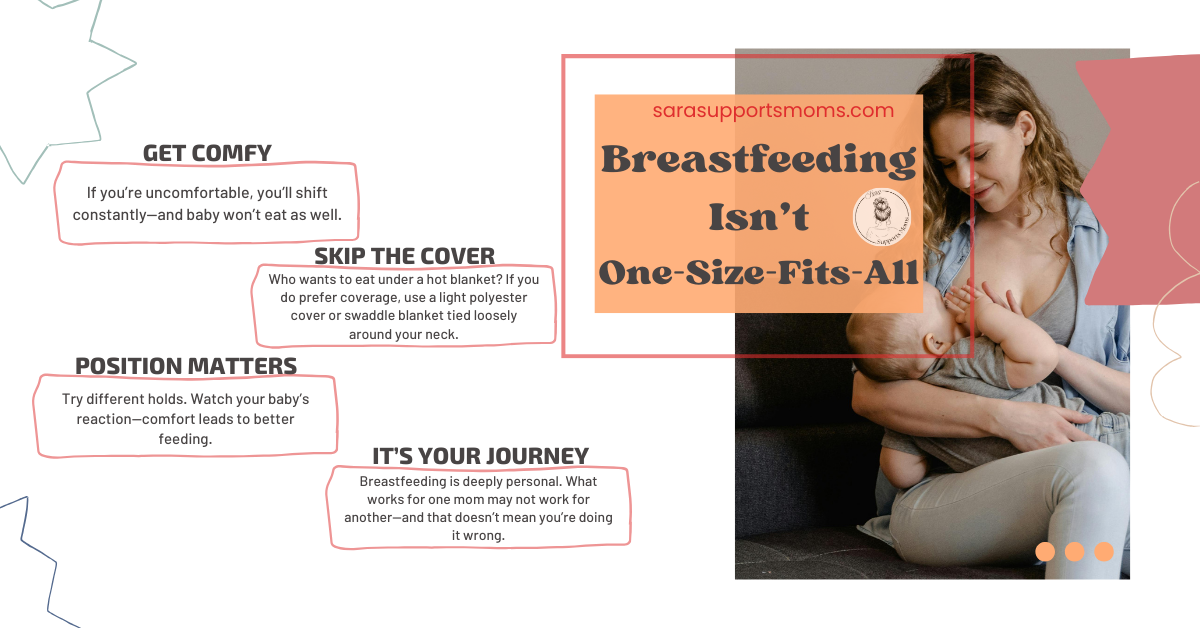
- Find a comfortable chair.
If you’re uncomfortable, you’ll shift constantly—and baby won’t eat as well. - Skip the cover if you want.
Who wants to eat under a hot blanket? If you do prefer coverage, use a thin cover, I prefer the ones that double as a car seat cover or a light polyester swaddle tied loosely around your neck. - Position matters.
Try different holds. Watch your baby’s reaction—comfort leads to better feeding. - Don’t compare your journey.
Breastfeeding is deeply personal. What works for one mom may not work for another—and that doesn’t mean you’re doing it wrong.
Even on the days it feels messy, exhausting, or uncertain—you’re doing great!